2026-11-19 · Derek Santos
How to Dry Out a Flooded Garage in Phoenix Without Mold Returning
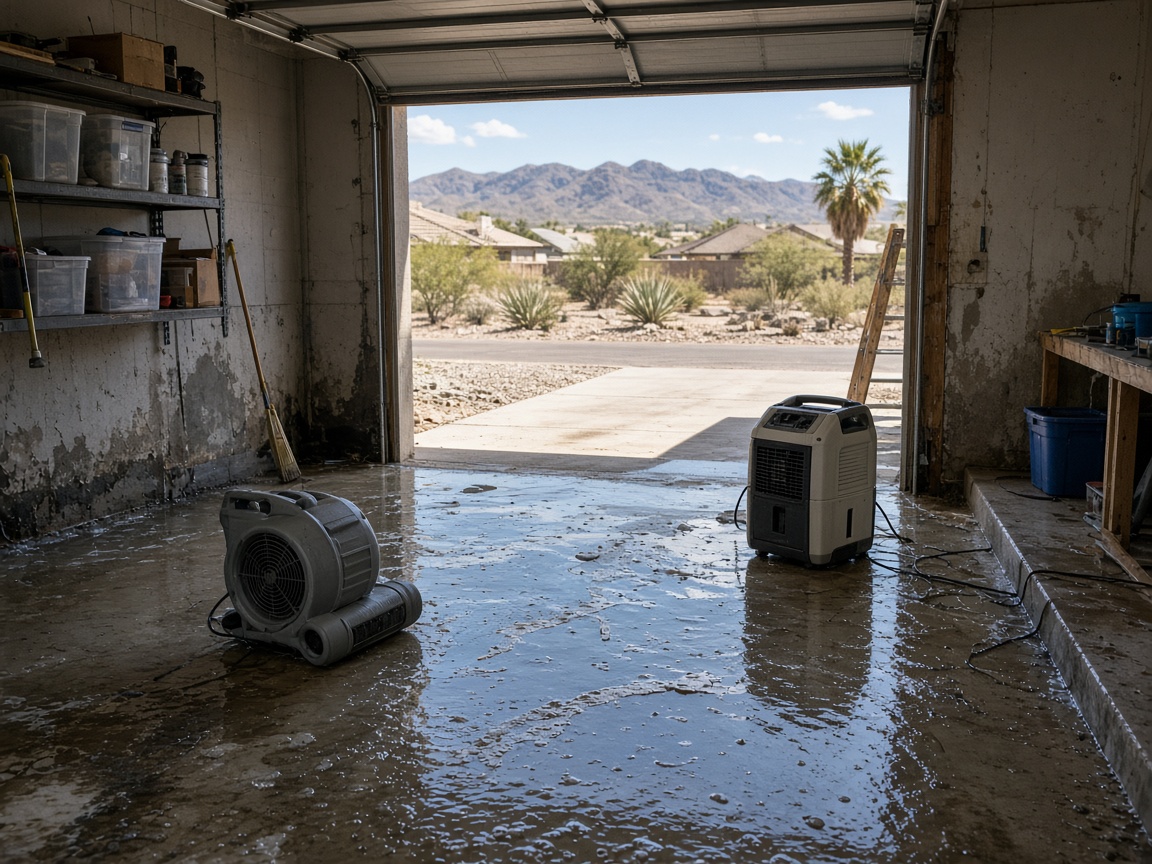
Drying a flooded garage in Phoenix takes 48 to 72 hours when you use industrial air movers and dehumidifiers while keeping indoor humidity under 50 percent the entire time. This timeline holds for most single-car and two-car garages in neighborhoods such as Arcadia and Biltmore where concrete slabs sit directly on compacted desert soil. The hot desert climate speeds surface evaporation yet monsoon moisture can push relative humidity above 60 percent for days, so equipment must run continuously rather than on timers.
Identify the Water Source and Scope First
Start by tracing how water entered the garage. In Maricopa County, common sources include overflowing irrigation ditches near Camelback East homes, roof runoff during monsoon storms, or broken supply lines in older Maryvale properties built before 1980. Lift floor mats and inspect the slab edges where water pools against the stem wall. Check the bottom 12 inches of drywall or OSB above the slab because capillary action pulls moisture upward even when standing water is only an inch deep. Document every wet material with photos before removal so later drying decisions stay accurate.
Extract Water and Discard Saturated Materials
Remove standing water with a wet vac or submersible pump before any drying begins. Once the floor is clear, cut away carpet padding, cardboard boxes, and particleboard shelving that have absorbed water; these items hold moisture long enough for mold colonies to form within 48 hours. In South Mountain garages with finished walls, remove the bottom 18 inches of drywall to expose the sill plate. Place removed materials outside in the shade so they do not re-wet the slab when temperatures hit 110 degrees. This step prevents hidden pockets that later cause musty odors.
Run Industrial Drying Equipment Correctly
Position air movers at a 45-degree angle across the slab and aim them toward open doors or windows for cross ventilation. Pair them with low-grain refrigerant dehumidifiers sized at one unit per 300 square feet of garage space. In Phoenix summer heat the machines work harder, so empty collection tanks twice daily rather than waiting for auto-shutoff. Keep the space closed to the rest of the house to avoid spreading spores into living areas. Check moisture readings on the slab every 12 hours with a pin meter until readings drop below 15 percent. Link this process to structural drying methods that handle the same concrete and framing details found across Tempe and Mesa garages.
Control Humidity to Block Mold Return
Mold needs moisture above 60 percent relative humidity for more than 24 hours. After the slab reads dry, continue running a dehumidifier for another full day while monitoring with a digital hygrometer placed on a shelf at eye level. In Scottsdale and Ahwatukee properties near Papago Park, afternoon monsoon humidity spikes can undo progress if doors are left open. Wipe metal tool cabinets and vehicle undercarriages with a microfiber cloth to remove surface condensation that forms overnight. If readings climb again, extend drying rather than sealing the space early.
Schedule Follow-Up Checks After Drying
Return 72 hours after equipment removal and recheck the slab and lower walls with the same moisture meter. Look for any new discoloration on stored items that might indicate hidden moisture. Homeowners in Camelback Mountain areas often store holiday decorations on shelves; pull a few boxes down and inspect the cardboard bottoms. If any area still feels cool to the touch or shows elevated readings, run equipment for another 24 hours. Review the full monsoon checklist in Monsoon Season Water Damage: What Phoenix Homeowners Should Check First for seasonal patterns that affect garages year after year. When readings stay stable, the job is complete.