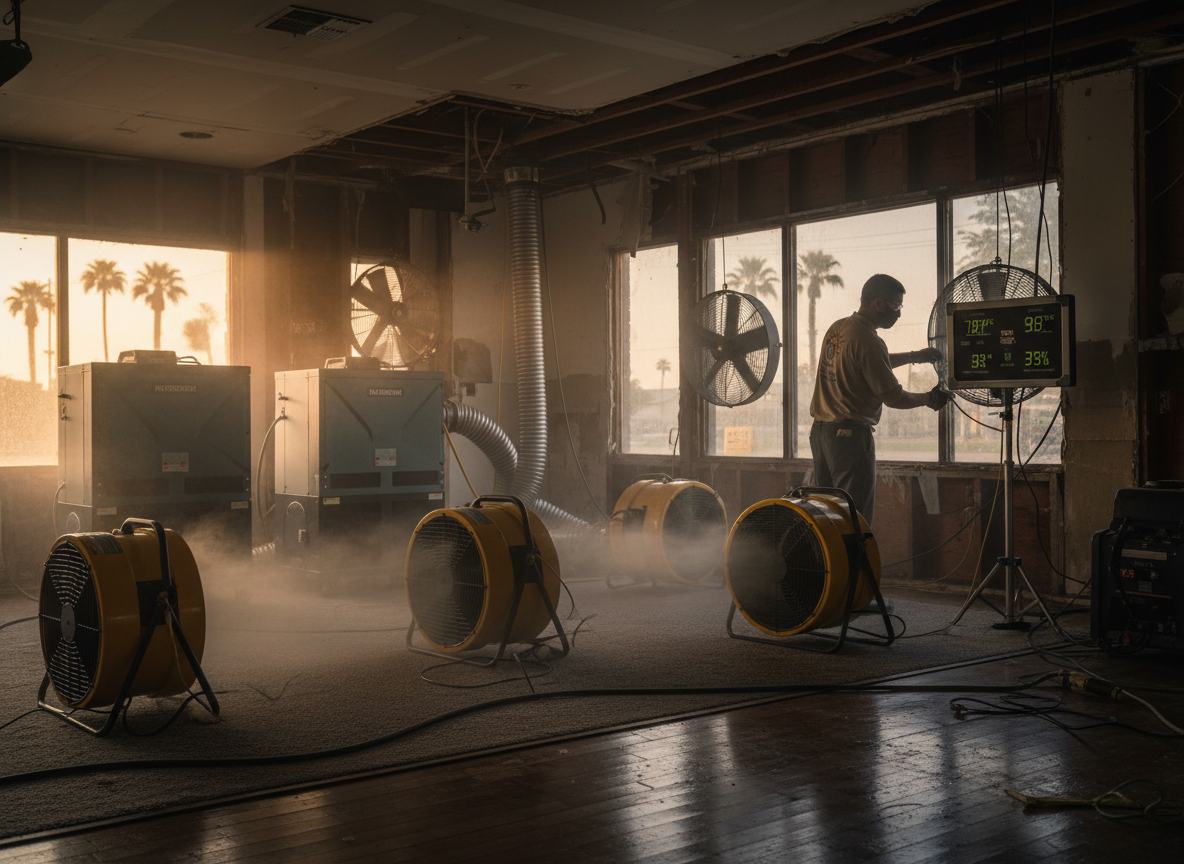
Phoenix summers push temperatures past 110 degrees, which speeds surface evaporation but leaves moisture trapped inside stucco, drywall and older plaster common in Arcadia and Biltmore homes. Without proper airflow and dehumidification, this residual water migrates into framing and subfloors, feeding mold within 48 hours. Monsoon humidity spikes in July and August further slow natural drying, so equipment must run longer than in drier months.
Many homes built before 1990 in Camelback East and Maryvale contain lath-and-plaster or early gypsum that absorbs water differently than modern materials. These assemblies require targeted air movers placed behind baseboards and moisture meters inserted at multiple depths to confirm drying progress. Skipping these steps often leads to callbacks when homeowners later notice musty odors near Papago Park or South Mountain properties.
Maricopa County building codes require documented moisture readings below 15 percent before walls can be closed. Technicians document readings at start and finish, noting any hidden pockets around plumbing chases or roof decks that extreme heat can mask. This record protects both the homeowner and the restoration crew when insurance adjusters review claims from Scottsdale or Tempe addresses.
Technician insight
In Phoenix, the thing that catches most people out with Structural Drying is how 110-degree heat dries the surface of stucco walls in Arcadia or Biltmore while moisture stays trapped behind the paper facing, especially after monsoon leaks. Homeowners often think the job is done once the room feels dry, but we still pull baseboards and run meters for days.
Hidden moisture in Ahwatukee stucco
A monsoon roof leak sent water into an Ahwatukee wall cavity. Surface readings looked normal but deeper probes showed elevated moisture in the plaster. Directed air movers and a dehumidifier ran for four days until readings dropped below threshold. The wall was saved without removal.
Structural Drying Services We Offer
✓Moisture Mapping and Detection
Thermal imaging and pin meters locate hidden water behind walls and under floors in Phoenix homes before visible damage spreads.
✓Dehumidification System Setup
Commercial dehumidifiers sized for desert heat pull moisture from air and materials in Arcadia and Biltmore properties.
✓Air Movement and Circulation
Directed air movers create evaporation paths through cavities without disturbing finishes in older Maricopa County construction.
✓Structural Material Assessment
On-site testing determines whether drywall, plaster or insulation can be saved or must be removed after water events.
✓Post-Drying Verification
Final moisture readings and documentation confirm structures meet county standards before reconstruction begins.
Structural Drying Cost in Phoenix, AZ
| Service | Typical Range | What Affects It |
|---|---|---|
| Initial moisture assessment | $250–$450 | Size of affected area and number of rooms |
| Daily equipment rental package | $300–$600 | Number of dehumidifiers and days required |
| Full structural drying job | $1,200–$3,500 | Home age, hidden pockets and monsoon timing |
Ranges are typical for Phoenix, AZ and confirmed with an exact written quote before any work starts.
How it works
- 1
Initial Inspection
Technicians arrive within hours and map all affected areas using meters and imaging to identify water extent.
- 2
Equipment Placement
Air movers and dehumidifiers are positioned for maximum airflow while protecting finishes common in Phoenix homes.
- 3
Daily Monitoring
Readings are taken each day and equipment adjusted until moisture levels stabilize across all materials.
- 4
Final Documentation
Written report with readings is provided before equipment removal and any needed reconstruction.
Pricing
Costs depend on square footage, materials and duration; upfront quotes provided during business hours.