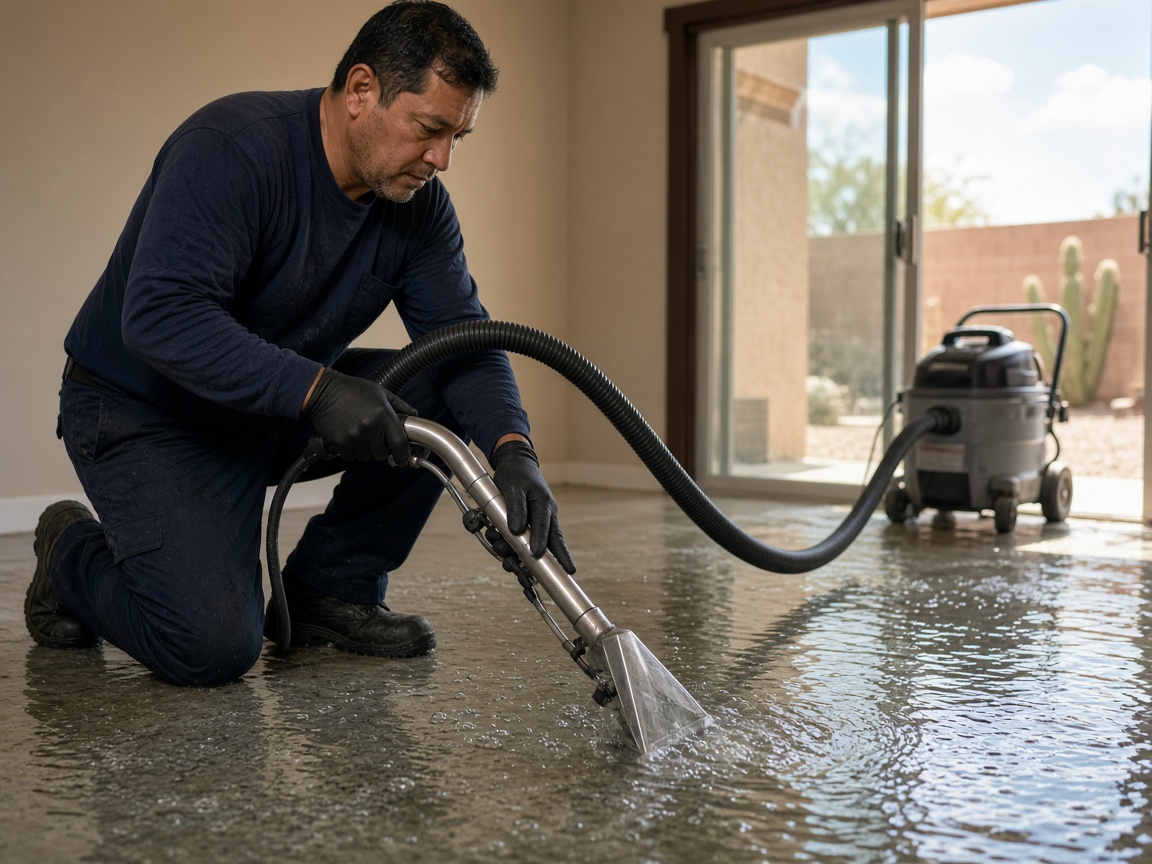
Phoenix summer heat above 110 degrees turns standing water into a rapid mold risk inside stucco homes built from the 1970s onward in neighborhoods like Maryvale and Camelback East. Extraction crews must pull water before it migrates under tile or into wall cavities common in these older builds. Pumps rated for high-volume removal handle the sudden influx from monsoon downpours that overwhelm flat roofs and low-lying lots near Papago Park.
Maricopa County soil is heavy clay in many pockets around South Mountain and Ahwatukee, so water pools instead of draining away. Technicians use moisture meters on concrete slabs and subfloors to locate hidden saturation that air movers alone cannot reach. In Scottsdale and Tempe townhomes with shared walls, extraction stops at the property line to avoid pushing moisture into neighboring units.
Commercial spaces near Chase Field often have epoxy-coated floors that trap water under equipment. Portable extractors with wand attachments pull liquid from these surfaces without damaging finishes. Homeowners in Biltmore frequently see water enter through sliding doors during high-wind events; crews document the entry point and extract before interior drywall wicks moisture upward.
Technician insight
In Phoenix the thing that catches most people out with water extraction is how fast 110-degree heat drives moisture into drywall and under tile in 1970s stucco homes around Camelback East. Clay soil in Maricopa County keeps water sitting against foundations longer than owners expect, so extraction has to reach the slab edge before it travels into neighboring units in Tempe or Scottsdale.
Monsoon Water In Arcadia Kitchen
Heavy rain pushed water under a sliding door in an Arcadia home. Crews found saturation extending under the tile into the adjacent hallway. High-volume extractors removed the standing water and pulled moisture from the subfloor before mold could form. The homeowner avoided full floor replacement.
Water Extraction Services We Offer
✓Residential Water Extraction
Removes standing water from kitchens, bathrooms, and living areas in single-family homes across Arcadia and Biltmore after appliance leaks or roof failures.
✓Basement Water Extraction
Clears water from below-grade spaces common in Ahwatukee and South Mountain properties where clay soil holds moisture against foundations.
✓Carpet and Pad Extraction
Pulls water from carpet and padding in Phoenix homes before mold sets in during extreme summer heat, preventing replacement in many cases.
✓Commercial Water Extraction
Handles water removal in retail and office spaces near Chase Field and Papago Park without disrupting business operations.
✓Appliance Leak Extraction
Targets water from failed water heaters, washing machines, and refrigerators in Maryvale and Camelback East residences.
Water Extraction Cost in Phoenix, AZ
| Service | Typical Range | What Affects It |
|---|---|---|
| Initial Extraction Visit | $250–$650 | Varies by home size and water depth in neighborhoods like Maryvale. |
| Carpet And Pad Extraction | $150–$400 | Higher when padding is glued to concrete slabs common in South Mountain homes. |
| Basement Or Crawlspace Extraction | $400–$900 | Clay soil and limited access increase time in Ahwatukee properties. |
Ranges are typical for Phoenix, AZ and confirmed with an exact written quote before any work starts.
How it works
- 1
Arrival And Safety Assessment
Technicians arrive in Phoenix, shut off water sources if active, and check for electrical hazards before beginning extraction.
- 2
Standing Water Removal
High-capacity pumps extract bulk water from floors and low areas in homes throughout Maricopa County.
- 3
Moisture Mapping
Infrared cameras and meters locate hidden water in walls and under slabs typical of older Phoenix construction.
- 4
Final Extraction And Containment
Remaining moisture is pulled and affected zones are isolated to protect unaffected areas in the home.
Pricing
Pricing depends on water volume, affected square footage, and access in Phoenix properties.